
-900x216.webp)
English
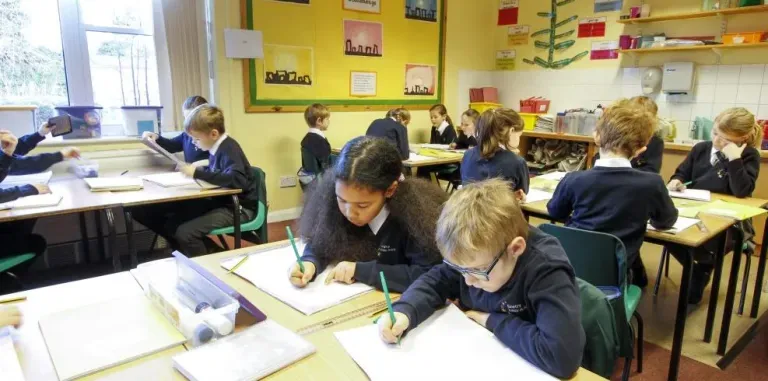
English is taught in a dedicated session in the morning and supported with additional focused activities in the basics of spelling punctuation, grammar and handwriting beyond the English lesson.
We follow the new National Curriculum 2014 for English. We have a strong emphasis on talk for writing and accuracy within both talk and writing.
Becoming confident, fluent readers and accurate, skilled and creative writers is key to our English Curriculum. Quality texts by a variety of well-known (and not so well-known) authors are chosen to model the skills that are being developed in all English Units of work.
Our approach to reading
Our Reading Model
At Sawtry Junior Academy, we instil a love of reading through exploration of texts linked to all curriculum areas. The teaching of systematic synthetic phonics allows the children to be supported in becoming independent decoders and ultimately readers. Pupils in Year 3 receive phonics teaching using the phonics scheme “Little Wandle”. From Year Three to Year Six, children are taught additional reading skills through discrete reading sessions as well as during English lessons and through cross curricular reading opportunities.
- Each reading session is linked to a specific reading skill (Vocabulary, Inference, Prediction, Explanation, Retrieval, Summarising/Sequencing).
- In addition to these taught reading sessions, reading is taught within each English unit of work linked to specific text types. These texts are carefully chosen to inspire and engage children. Reading skills are reinforced through English lessons.
- Every class has shared story time where picture books, novels or non-fiction texts are enjoyed as a class. Children also have individual reading books and are encouraged to read every day at home. They are heard read individually in school as often as possible by teachers, teaching assistants and trained reading volunteers (including parents).
- At Sawtry Junior Academy, a range of intervention strategies are used to move the children’s learning forward.
Through their time in school, children will experience additional reading experiences such as visits from authors, visits to the local libraries and themed book weeks. Our school provides opportunities for children to purchase books through book fairs. We continually invest in creating a library which is inviting and well-structured containing rich, varied texts.
Our approach to writing
Our writing model
At Sawtry Junior Academy, we aim for children to be able to express themselves effectively through both the spoken and written word; children should grow as proficient communicators, who are able to adapt their writing for a wide range of purposes and audiences. We want to instil an enjoyment of language in our pupils, by enabling them to explore its patterns, structures and origins, allowing them to understand and make controlled writing choices to impact the reader.
The English curriculum is carefully mapped to ensure that all children have the opportunity to write across a range of text types which include a balance of fiction, non-fiction and poetry (which includes text types as broad as adventure narratives, to explanation texts, to formal speeches, to nonsense poems and much more.) Units of work are based around high quality, engaging stimuli, and often link to the themed learning to allow children to make links in their learning and write across the curriculum.
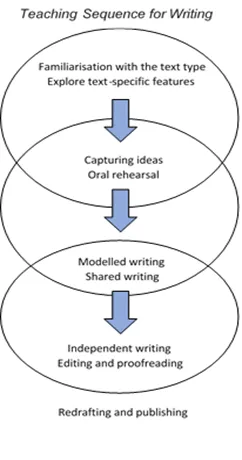
English Medium Term Plans ensure effective coverage and progression of text types. Prior to planning each unit of work, teachers follow a backward planning model, looking at the final intended outcomes and working back, considering the grammatical teaching points which should be incorporated into the unit of work. Grammar coverage for each year group is made explicit to teachers and the teaching is interwoven throughout the writing units so that children can understand its purpose in a context and use it in a controlled and creative manner.
Sequence for Writing
Handwriting
Our handwriting model
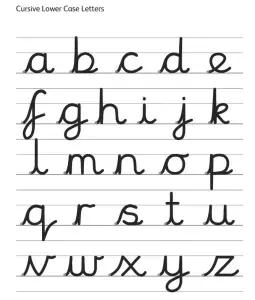
At Sawtry Junior Academy we teach the children a cursive handwriting script using a resource called “Letter join”. The children are taught in discrete handwriting sessions with opportunities to practice throughout the week the correct letter formation.
Please find below documents and resources to help support your child with English at Sawtry Junior Academy.
The link below is to a really useful website that has suggested reading lists for children in Key Stage 2. We hope you find it helpful.